Quick Feet, Sharp Throws: 5 Drills for Young QBs

A young quarterback can have a cannon for an arm, a mind full of plays, and enough confidence to start a small country—but if the feet are sloppy, the whole operation turns into organized chaos. Footwork is the invisible engine of quarterback play. It’s what gets the hips lined up, the shoulders square, and the ball out on time instead of into the nearest defender’s hands.
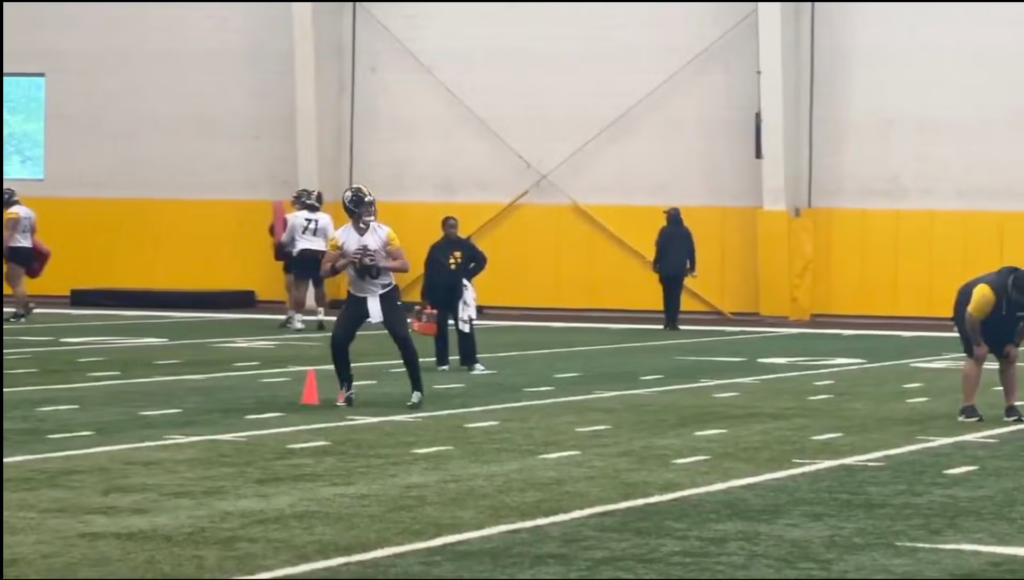
Watch any elite quarterback and you’ll notice something: their feet are always working. Not frantically. Not dramatically. Just constantly making micro-adjustments that keep everything else in sync. The arm gets the glory, but the feet do the engineering.
The good news? Footwork can be trained. The better news? It doesn’t require a wizard, a lab, or a hundred cones arranged like a football séance. It just takes repetition, attention, and a willingness to look a little silly while getting a lot better.
Here are six foundational drills that turn clumsy footwork into quarterback poetry.
1. Ladder Quick Feet
The agility ladder is football’s version of a spelling bee for the legs. It teaches rhythm, balance, and fast foot turnover—without turning the quarterback into a pogo stick.
How to do it:
- Step in-and-out of each square with crisp, controlled footwork
- Keep the upper body relaxed and the eyes forward—not down at your feet
- Move through the ladder quickly, but don’t sacrifice precision for speed
- Start with basic patterns: two feet in each square, then progress to one foot per square
- Add variations: lateral shuffles, Ickey Shuffle, Ali Shuffle, or in-in-out-out patterns
Coaching cues:
- “Stay on the balls of your feet—you’re not planting corn.”
- “If I hear your feet slapping, you’re working too hard.”
- “Eyes up. The ladder isn’t going anywhere.”
Common mistakes:
- Looking down (this kills field vision habits)
- Landing flat-footed or on heels
- Tensing the upper body and losing fluidity
Why it matters:
Quarterbacks who move well in tight spaces handle pressure better. In the pocket, speed isn’t about running away—it’s about staying calm while your feet work faster than your thoughts. The ladder builds the neuromuscular coordination that lets a quarterback slide two feet left to avoid a rusher without even thinking about it.
Progression:
Start with 3 sets of 10 yards at 70% speed. Once the pattern is clean, increase tempo. Advanced quarterbacks can add a ball toss at the end of each ladder run to simulate transitioning from footwork to throwing.
2. Cone Weave Drops
This drill teaches a quarterback how to move backward, stay balanced, and set up for a throw without looking like they’re escaping a swarm of bees.
How to do it:
- Place 3–5 cones in a straight line with 2–3 feet between each
- Start under center or in shotgun stance
- Drop back and weave around the cones with short, efficient steps
- Keep shoulders square to the line of scrimmage throughout
- Finish with a proper throwing base at the end
Coaching cues:
The feet should stay light and under control. No hopping. No heel-clicking performance art. Think “glide,” not “gallop.”
Common mistakes:
- Opening the hips too much during the weave
- Taking steps that are too long (leads to off-balance throws)
- Letting the upper body lean or twist excessively
Why it matters:
This builds clean drop-back mechanics and helps young quarterbacks learn how to create throwing space while staying ready to deliver. It also mimics the subtle pocket movements required when defensive tackles collapse the middle or edge rushers force lateral adjustments.
Progression:
Begin with slow, exaggerated movements to establish the pattern. Add a coach or partner calling out “throw” at random points during the weave to simulate real-game unpredictability. Advanced version: have a receiver run a route and deliver an actual throw after navigating the cones.
3. The Plant-and-Throw Drill
This is where footwork meets football reality: get set, plant the back foot, and throw with purpose.
How to do it:
- Begin with a short 3-step or 5-step drop-back
- Plant the back foot at a slight angle (about 45 degrees to the target)
- Align the front foot toward the target—this is your compass
- Drive off the back foot and throw immediately after the plant
- Follow through with the hips rotating toward the target
Coaching cues:
- “Back foot plants first, front foot points the way.”
- “Your belt buckle should finish facing your receiver.”
- “If your plant foot is dancing, you’re not committed.”
Common mistakes:
- Planting with the foot perpendicular to the target (kills hip rotation)
- Drifting forward or backward during the throw
- Throwing before the feet are set (the “jump pass” that isn’t actually a designed jump pass)
Why it matters:
A quarterback’s feet are like the address on a package. If they’re pointed in the wrong direction, the ball may still arrive—but probably with complaints. Proper planting helps generate power, accuracy, and timing. It’s the difference between a wobbly duck and a tight spiral that arrives on schedule.
Progression:
Start stationary, then add the drop-back. Progress to reading a single defender (coach with a pad) who shows “rush” or “drop” to force decision-making while maintaining footwork discipline. Eventually, incorporate live routes with timing requirements.
4. Shuffle, Reset, Fire
In the pocket, things rarely stay pretty for long. This drill trains quarterbacks to move laterally, regain balance, and still make a throw.
How to do it:
- Start in a throwing stance
- Shuffle 2–3 steps to the right or left (coach calls the direction)
- Quickly reset the feet: back foot planted, front foot pointed at target
- Deliver the throw immediately after resetting
Coaching cues:
- “Shuffle, don’t cross over—crossing your feet is how you get sacked.”
- “Reset fast, but reset right. Rushed feet = rushed throws.”
- “Keep your eyes downfield during the shuffle.”
Common mistakes:
- Crossing feet during the shuffle (creates vulnerability to pressure)
- Failing to fully reset before throwing (leads to inaccurate, arm-only throws)
- Dropping the eyes during movement
Why it matters:
Pocket presence isn’t about standing still—it’s about controlled movement. This drill teaches quarterbacks to buy time without bailing out, and to deliver accurate throws even when the pocket has shifted. It’s the skill that separates quarterbacks who panic under pressure from those who calmly slide and deliver dimes.
Progression:
Add a pass rusher with a bag or pad who forces the shuffle. Progress to live rushers at half speed, then full speed. Combine with route concepts that require specific timing—the quarterback must shuffle, reset, and still hit the window.
5. Three-Step Hitch Timing
Quick game is all about rhythm, and rhythm starts with the feet. This drill ingrains the timing and footwork for quick throws like hitches, slants, and speed outs.
How to do it:
- Line up in shotgun or under center
- Take exactly three steps: small, medium, large (or “gather, gain, throw”)
- On the third step, plant the back foot and release immediately
- The ball should leave your hand as the third step hits the ground
Coaching cues:
- “One-two-THREE. The throw happens on three, not after.”
- “Your feet are the metronome. The receiver dances to your beat.”
- “Short steps keep you in rhythm—don’t overstride.”
Common mistakes:
- Taking a fourth “adjustment” step (kills timing)
- Inconsistent step lengths (makes timing unpredictable)
- Planting too upright or too deep (affects release point)
Why it matters:
Quick game is the foundation of modern passing offenses. When a quarterback’s three-step drop is automatic, they can focus entirely on reading the defense and delivering with confidence. Sloppy footwork on quick game turns easy completions into incompletions or, worse, interceptions.
Progression:
Start with air throws to establish the rhythm. Add a stationary receiver, then a receiver running a live route. Finally, add a defender to force reading and decision-making while maintaining footwork discipline.
6. Roll-Out Mechanics Drill
Not every throw happens from a clean pocket. This drill teaches quarterbacks how to throw accurately on the move—whether by design or desperation.
How to do it:
- Start from center or shotgun
- Roll out to the right or left (start with your dominant side)
- As you approach the throwing spot, plant the outside foot hard
- Hop-step or crow-hop to square your shoulders to the target
- Deliver the throw with proper mechanics
Coaching cues:
- “Plant and pivot—don’t throw while you’re still drifting.”
- “Get your shoulders around. Throwing across your body is a gift to the defense.”
- “On the move doesn’t mean out of control.”
Common mistakes:
- Throwing off the back foot while still moving (accuracy nightmare)
- Failing to square the shoulders (leads to sidearm, inaccurate throws)
- Not setting the feet at all (the “hope and heave”)
Why it matters:
Modern offenses use designed rollouts, bootlegs, and sprint-outs to create easy throws and stress the defense. Quarterbacks who can’t throw accurately on the move are one-dimensional. This drill builds the mechanics to be dangerous outside the pocket, not just inside it.
Progression:
Start with walk-throughs to establish the footwork pattern. Progress to half-speed, then full-speed rollouts. Add a receiver running a comeback or dig route. Advanced: roll to your non-dominant side (much harder, much more valuable).
Putting It All Together
Footwork isn’t glamorous. It doesn’t show up on highlight reels. But it’s the difference between a quarterback who looks lost under pressure and one who looks like they’ve got all day—even when they don’t.
The best part? These drills don’t require a full team, a massive facility, or even a football. A few cones, a ladder, and 20 minutes of focused work will do more for a young quarterback’s development than an hour of aimless throwing.
Start slow. Master the patterns. Then speed up. The feet will teach the brain, and the brain will teach the arm.
And one day, without even realizing it, that young quarterback will drop back, feel pressure, shuffle left, reset, and deliver a perfect strike—all while their feet handle the choreography like they’ve done it a thousand times.
Because they have.